
Documentary
The Garden of Peace
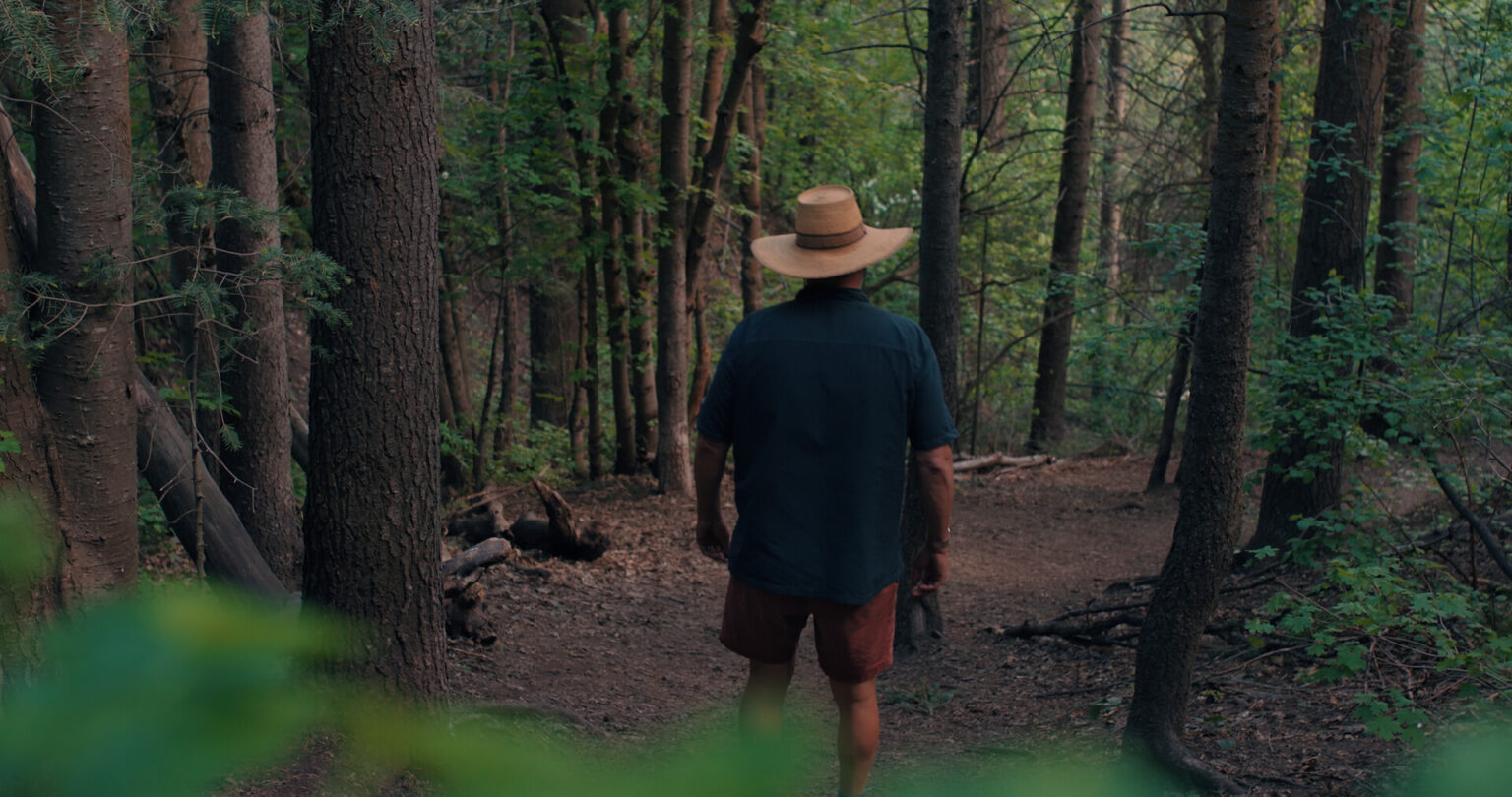
I love this beautiful state that I live. In the serene landscapes of Utah, filmmaker Walter Mirkšs created a seven-minute documentary, “The Garden of Peace,” telling the story of Chris Newton, a certified forest bathing guide, and his discovery of the Japanese art of self-care. The documentary provides a glimpse into the beauty of nature and the rejuvenating practice of forest bathing.
Mirkšs, the producer and director of the documentary, shared the origins of the project during an interview with me earlier in the week. Mirkšs recounted that the idea sprouted from a chance encounter with Chris Newton over a year ago while working on a different project for an advertising agency. Mirkšs, having a deep connection with nature, was immediately drawn to Newton’s passion for forest bathing, sparking the inspiration to create a short film on the subject.
The filmmaker’s favorite aspect of crafting “The Garden of Peace” lay in the immersive experiences of capturing the footage. Over a 10-month period, Mirkšs ventured into nature regularly, letting the beauty of the surroundings speak for itself.
“I definitely enjoyed just being outdoors, seeing the sights and breathing the fresh air” said Mirkšs.” “All I really had to do was point the camera and press record and nature did the rest.”
While the production was relatively hassle-free, Mirkšs acknowledged the challenges of balancing the project with a full-time job. Finding time and energy for a passion project can be demanding, and coordinating with Newton for additional shots added an extra layer of complexity. Despite these hurdles, the filmmaker found solace in the overall process.
Reflecting on the journey, Mirkšs revealed a desire to delve deeper into the subject of forest bathing. He acknowledged that the documentary, though intentionally short, could have explored the history and art of forest bathing more comprehensively. This reflection serves as a testament to the filmmaker’s commitment to continuous improvement in his craft.

As for the audience, Mirkšs revealed that the hope is for “The Garden of Peace” to premiere at the Utah Film Festival, given its close connection to the state. Most of the footage was shot in Utah, and both Newton and Mirkšs reside in the picturesque region. However, if the premiere doesn’t materialize at the festival, Mirkšs remains open to sharing the documentary online for a broader audience to experience.
For those curious about future projects from Mirkšs and Newton, the filmmaker humorously admitted to having no social media presence. Instead, he suggested keeping an eye on the Utah Film Festival’s schedule, teasing that viewers might discover his works through festival screenings.
“The Garden of Peace” promises to be a visual and introspective journey, inviting audiences to explore the transformative power of nature and self-care. As the anticipation builds for its premiere, the documentary stands as a testament to the beauty that can be found in the quiet moments of reflection and the embrace of the natural world.
I love relating the stories of filmmakers like Mirkšs and Newton. At the Utah International Film Festival, we get to showcase the final work of talented filmmakers every year. And the deadline for submissions is looming around the corner, December 31st. Mirkšs will not have to wait much longer after the deadline as films will be selected by January 15th. Now it’s time for me to hit the road and discover more fantastic storytellers. See you on set.

Documentary
6 New Notable Documentaries Made in Utah



Documentary
10 Don’t-Miss Biographical Docs


Documentary
Chekhov.Offstage – Film Review
Warning Spoilers
I’ll be honest, when I saw we had a 40-minute Russian documentary about a theater submitted to the festival, I was ready to make an excuse to pass on the review. Then learned that this was a film in sign language. A foreign art film about theater, with subtitles? Sounded like a tough sell, and something I’d normally skip for a good nap. But it was only 40 minutes, so I figured, what have I got to lose?
I’m glad I took the chance, because “Chekhov.Offstage” completely blindsided me. This is not the stuffy, academic history lesson I was bracing for.
The film’s secret sauce is in its setup, which is something I never would have expected. It’s not a narrator droning on about dates and famous names. Instead, I found myself following a hard-of-hearing guide giving a personal, backstage tour of the legendary Chekhov Moscow Art Theatre to a deaf teenage boy. Right away, I realized the film wasn’t just telling me about history; it was showing me history being passed down in a deeply personal way. The guide’s mission is to light a fire in this kid, to show him that even in this hallowed, old-world place, there’s a spot for someone like him.
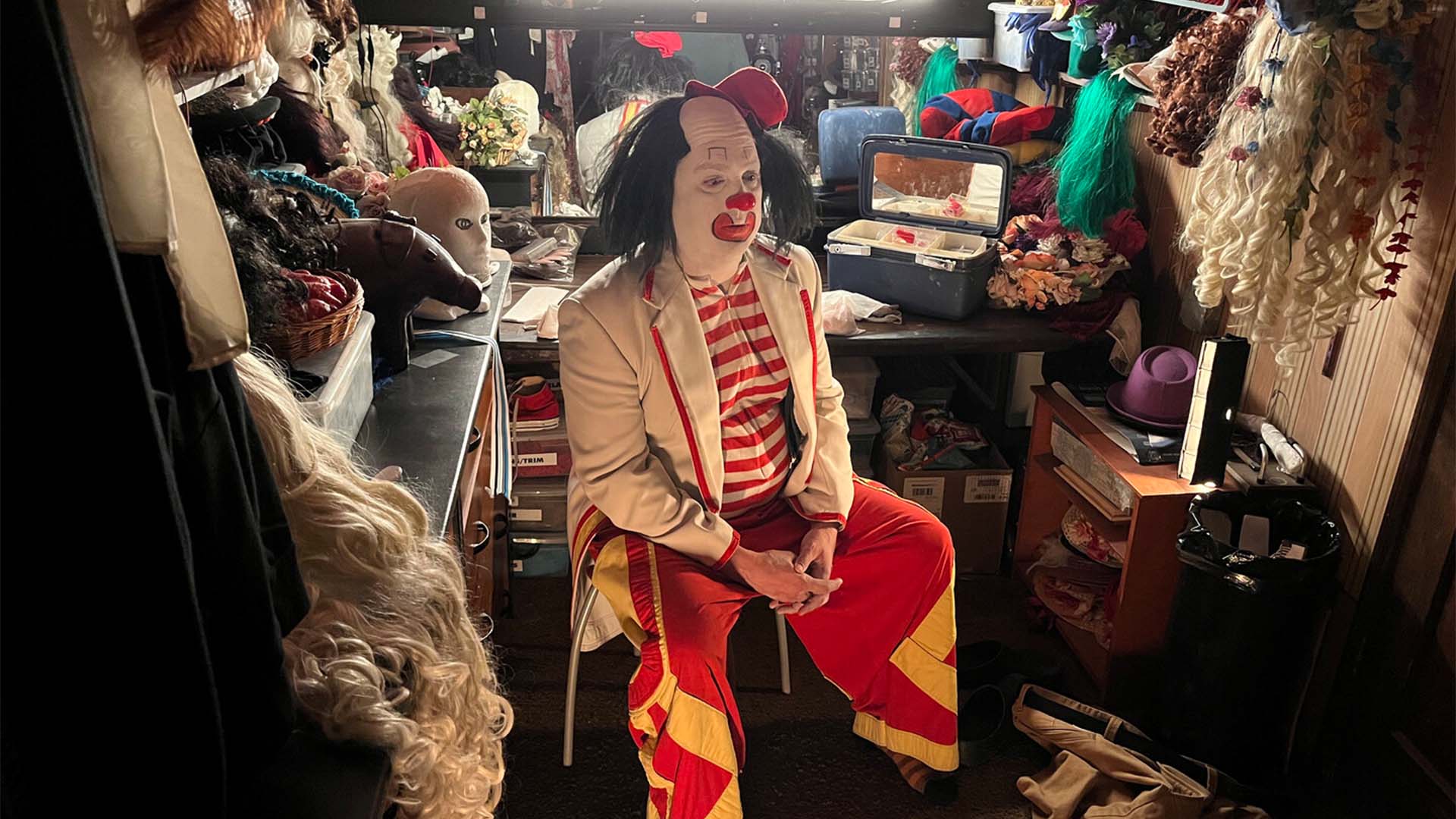
And what a tour it was. I wasn’t just looking at old props. The guide turns it into a real adventure. We go places most people never see—I felt like I was right there with them, creeping around the mysterious vaults under the main stage and climbing up to the “cosmic” upper galleries. The boy gets to see the makeup artists, the set builders, the machinery operators—the real engine room of the theater. I watched him taking it all in, imagining himself in each role, and I could feel his fascination with the innovative spirit of the theater’s founders, Stanislavsky and Nemirovich-Danchenko.
At first, I thought the sign language might be a barrier, but it quickly became the film’s biggest strength. It forced me to pay attention differently—to watch the expressions, the hands, the raw communication happening on screen. It was more immersive that way. There’s a note at the end that says, “Our film is not about deaf people. Our film is for everybody,” and they absolutely nail it. This isn’t a story about limitations; it’s a story about human connection and passion, told through a different, and frankly beautiful, lens.
After I finished the film, I had to look up the director, Anna Turchaninova, and it all clicked into place. Her biography shows this isn’t a one-off project for her; she’s made other films in Russian Sign Language and has a history of working on creative projects for the deaf community. That authenticity is something you can’t fake, and I could feel her experience woven through every scene.
“Chekhov.Offstage” manages to do a lot in a short amount of time. It’s a fascinating look at a world-famous institution, a powerful story about mentorship, and a witness to the idea that the drive to create can overcome any barrier. It’s got grit, heart, and a perspective I won’t soon forget.
Don’t let the description fool you. Give it 40 minutes of your time. You won’t regret it.

A Call That Changes Everything in Don’t Hang Up

The Quiet Rebellion of Sister Wives

Can You Trust What You See Anymore?

Finding Acceptance

Utah Screenwriters Spotlight

Waiting for You

