
Documentary
A Life of Intent: Growing Desert Roots
Directed by Caroline Boyd
Warning – This review may contain spoilers.
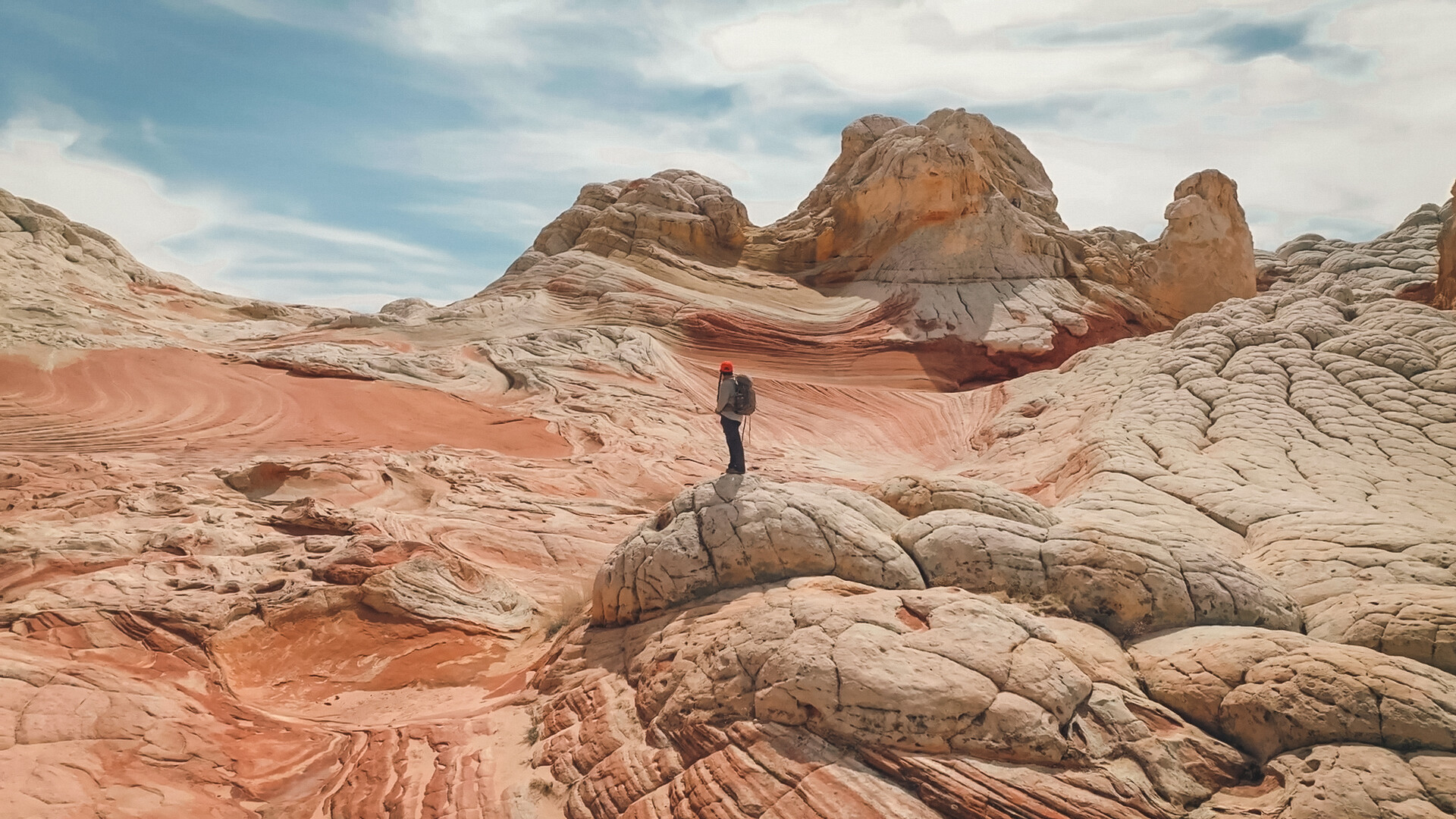
A Life of Intent: Growing Desert Roots takes us through the journey of Shelly, a nature photographer who found solace and meaning in her art after a traumatic brain injury at 19. Shelly’s story, set against the vast and serene landscapes of the Southwest, is both inspiring and moving. I felt drawn into her process of healing and self-discovery, especially as she uses photography to navigate the challenges brought on by her injury. Her resilience shines through and I couldn’t help but admire her determination to live a life filled with purpose.
The documentary beautifully weaves together breathtaking visuals of the desert with Shelly’s personal narrative. The cinematography is one of the film’s strongest points—capturing the Southwest in all its splendor, with vibrant shots of nature that contrast with Shelly’s more intimate still photography. The juxtaposition of these large-scale live images with her personal photographs gave me a deeper connection to her story, highlighting the power of nature as both a subject and a source of healing. However, there were moments where I felt that the visuals didn’t fully align with the dialogue, which left certain scenes feeling somewhat disjointed.
Caroline Boyd’s emphasized Shelly’s transformative journey and the healing power of nature. This theme is apparent throughout, though there are moments where the editing and sound design could have been tighter to create a more seamless flow. The scene where Shelly speaks about the tree for example, felt a bit forced and I would have liked to see that story unfold more naturally. Still the overall message of the film—resilience through creativity and connection with nature—came across clearly and left me reflecting on how we all find ways to cope with life’s challenges.
Now onto the technical side. The cinematography is a highlight of the film, especially in the way it captures the beauty of the desert and Shelly’s connection to it. The background music complemented the visuals well, heightening the emotional impact without overwhelming the story. I found that the editing could have been stronger in certain parts, as some scenes didn’t flow as smoothly as others, particularly when the focus shifted between Shelly’s personal story and her professional work as a guide. I also noticed that while Shelly’s monologue was touching, it had to do a lot of the heavy lifting to convey the film’s deeper themes and it felt like the narrative was leaning too heavily on her words instead of letting the visuals tell more of the story.
A Life of Intent: Growing Desert Roots is an inspiring exploration of Shelly’s journey toward acceptance and healing through photography and nature. Its heart is in the right place, and Shelly’s story is one of courage and resilience that will resonate with viewers. The documentary effectively shows the power of art as a tool for personal growth and reminds us of the beauty that can be found even in the most challenging circumstances.
This documentary offers a reflective and heartfelt look at one woman’s journey to reclaim her life after trauma. The emotional depth and breathtaking visuals make it an inspiring watch. Audiences who appreciate the intersection of nature, art, and personal resilience will connect with Shelly’s story.

Documentary
6 New Notable Documentaries Made in Utah


Documentary
10 Don’t-Miss Biographical Docs


Documentary
Chekhov.Offstage – Film Review
Warning Spoilers
I’ll be honest, when I saw we had a 40-minute Russian documentary about a theater submitted to the festival, I was ready to make an excuse to pass on the review. Then learned that this was a film in sign language. A foreign art film about theater, with subtitles? Sounded like a tough sell, and something I’d normally skip for a good nap. But it was only 40 minutes, so I figured, what have I got to lose?
I’m glad I took the chance, because “Chekhov.Offstage” completely blindsided me. This is not the stuffy, academic history lesson I was bracing for.
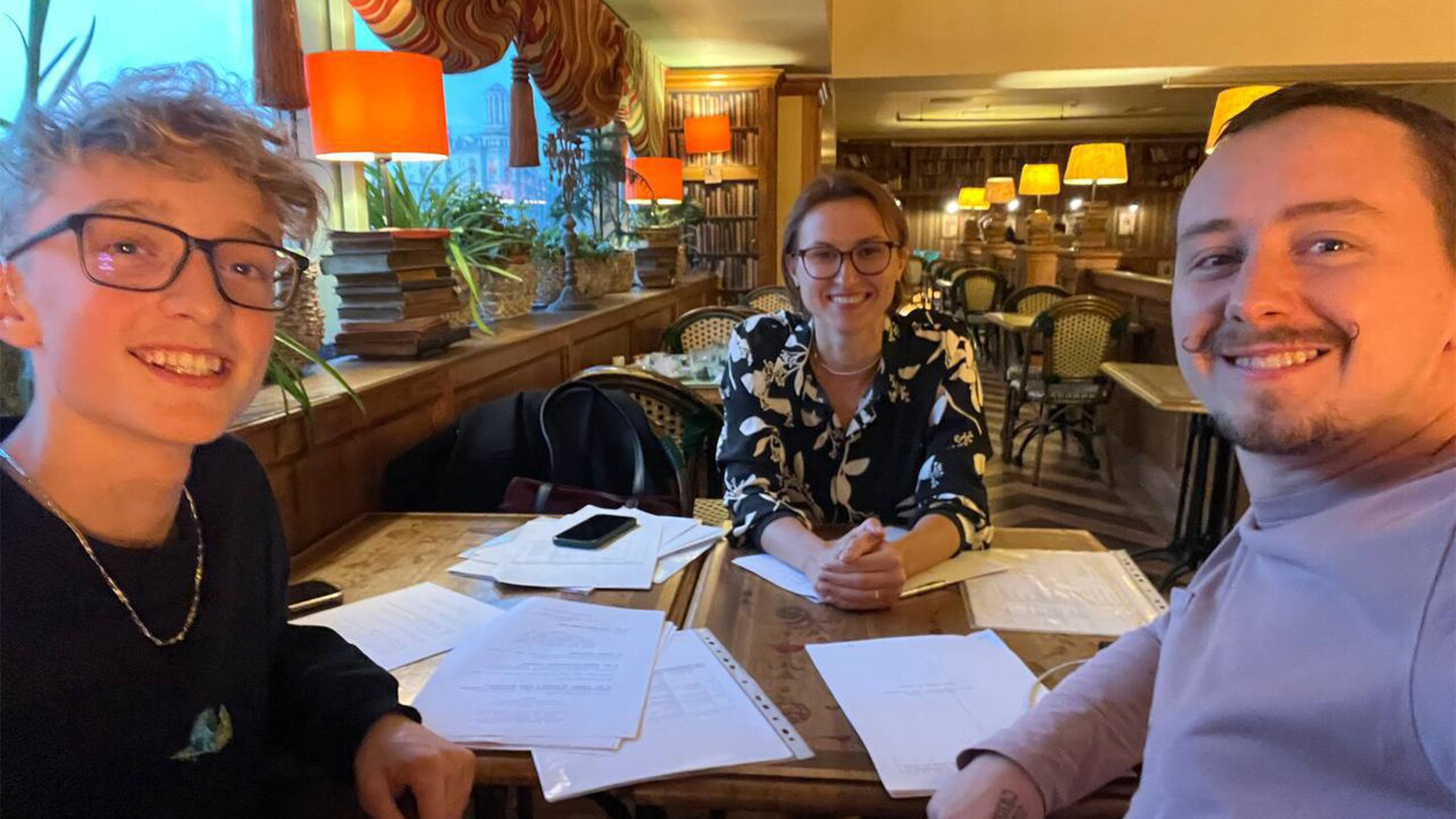
The film’s secret sauce is in its setup, which is something I never would have expected. It’s not a narrator droning on about dates and famous names. Instead, I found myself following a hard-of-hearing guide giving a personal, backstage tour of the legendary Chekhov Moscow Art Theatre to a deaf teenage boy. Right away, I realized the film wasn’t just telling me about history; it was showing me history being passed down in a deeply personal way. The guide’s mission is to light a fire in this kid, to show him that even in this hallowed, old-world place, there’s a spot for someone like him.
And what a tour it was. I wasn’t just looking at old props. The guide turns it into a real adventure. We go places most people never see—I felt like I was right there with them, creeping around the mysterious vaults under the main stage and climbing up to the “cosmic” upper galleries. The boy gets to see the makeup artists, the set builders, the machinery operators—the real engine room of the theater. I watched him taking it all in, imagining himself in each role, and I could feel his fascination with the innovative spirit of the theater’s founders, Stanislavsky and Nemirovich-Danchenko.
At first, I thought the sign language might be a barrier, but it quickly became the film’s biggest strength. It forced me to pay attention differently—to watch the expressions, the hands, the raw communication happening on screen. It was more immersive that way. There’s a note at the end that says, “Our film is not about deaf people. Our film is for everybody,” and they absolutely nail it. This isn’t a story about limitations; it’s a story about human connection and passion, told through a different, and frankly beautiful, lens.
After I finished the film, I had to look up the director, Anna Turchaninova, and it all clicked into place. Her biography shows this isn’t a one-off project for her; she’s made other films in Russian Sign Language and has a history of working on creative projects for the deaf community. That authenticity is something you can’t fake, and I could feel her experience woven through every scene.
“Chekhov.Offstage” manages to do a lot in a short amount of time. It’s a fascinating look at a world-famous institution, a powerful story about mentorship, and a witness to the idea that the drive to create can overcome any barrier. It’s got grit, heart, and a perspective I won’t soon forget.
Don’t let the description fool you. Give it 40 minutes of your time. You won’t regret it.


