
Documentary
10 Don’t-Miss Biographical Docs



Documentary
6 New Notable Documentaries Made in Utah



Documentary
Chekhov.Offstage – Film Review
Warning Spoilers
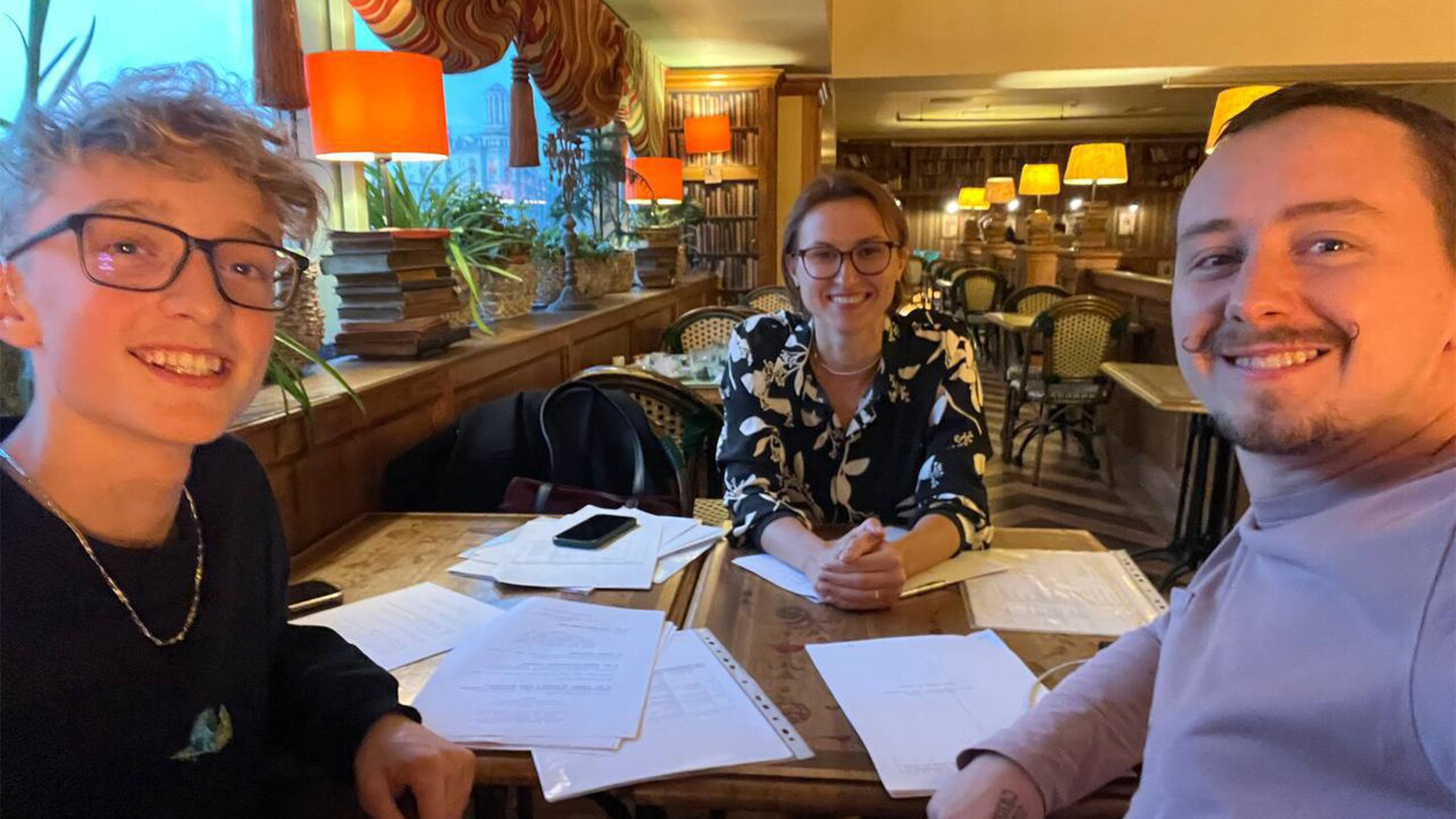
I’ll be honest, when I saw we had a 40-minute Russian documentary about a theater submitted to the festival, I was ready to make an excuse to pass on the review. Then learned that this was a film in sign language. A foreign art film about theater, with subtitles? Sounded like a tough sell, and something I’d normally skip for a good nap. But it was only 40 minutes, so I figured, what have I got to lose?
I’m glad I took the chance, because “Chekhov.Offstage” completely blindsided me. This is not the stuffy, academic history lesson I was bracing for.
The film’s secret sauce is in its setup, which is something I never would have expected. It’s not a narrator droning on about dates and famous names. Instead, I found myself following a hard-of-hearing guide giving a personal, backstage tour of the legendary Chekhov Moscow Art Theatre to a deaf teenage boy. Right away, I realized the film wasn’t just telling me about history; it was showing me history being passed down in a deeply personal way. The guide’s mission is to light a fire in this kid, to show him that even in this hallowed, old-world place, there’s a spot for someone like him.
And what a tour it was. I wasn’t just looking at old props. The guide turns it into a real adventure. We go places most people never see—I felt like I was right there with them, creeping around the mysterious vaults under the main stage and climbing up to the “cosmic” upper galleries. The boy gets to see the makeup artists, the set builders, the machinery operators—the real engine room of the theater. I watched him taking it all in, imagining himself in each role, and I could feel his fascination with the innovative spirit of the theater’s founders, Stanislavsky and Nemirovich-Danchenko.
At first, I thought the sign language might be a barrier, but it quickly became the film’s biggest strength. It forced me to pay attention differently—to watch the expressions, the hands, the raw communication happening on screen. It was more immersive that way. There’s a note at the end that says, “Our film is not about deaf people. Our film is for everybody,” and they absolutely nail it. This isn’t a story about limitations; it’s a story about human connection and passion, told through a different, and frankly beautiful, lens.
After I finished the film, I had to look up the director, Anna Turchaninova, and it all clicked into place. Her biography shows this isn’t a one-off project for her; she’s made other films in Russian Sign Language and has a history of working on creative projects for the deaf community. That authenticity is something you can’t fake, and I could feel her experience woven through every scene.
“Chekhov.Offstage” manages to do a lot in a short amount of time. It’s a fascinating look at a world-famous institution, a powerful story about mentorship, and a witness to the idea that the drive to create can overcome any barrier. It’s got grit, heart, and a perspective I won’t soon forget.
Don’t let the description fool you. Give it 40 minutes of your time. You won’t regret it.
Documentary
Pie In the Sky – Review
Warning Spoilers
There are films that tell a story, and then there are films that invite you into a dream. They are often short, deeply personal, and carry a sense of wonder that lingers long after the credits roll. I had such an experience with “Pie in the Sky,” a music video that begins in the cosmos and finds its profound conclusion in one of the most revered rooms in music history. It’s a work of immense heart, and while not without its flaws, its sincerity is both palpable and moving.
The film opens with a sweep of grandeur, presenting the world-renowned Royal Philharmonic Orchestra, led by acclaimed pianist Jean-Yves Thibaudet and conductor Robert Ziegler. The performance, captured at London’s Barbican Concert Hall, immediately establishes a tone of artistic significance. From this sonic splendor, we are whisked away into a whimsical animated adventure. We follow a girl and her pet lost in space who discover a pie-shaped spacecraft—an adorable and charming premise that hints at a universe less lonely than we might imagine.
This animated sequence poses a playful question: “What is the ‘pie in the sky’?” It’s a metaphor for our loftiest dreams and wildest curiosities. For a moment, the film feels like a gentle reminder that we are not alone, that perhaps other eyes are watching our journey. However, the narrative of this cosmic voyage feels more like a sketch than a fully realized story. The reunion of the characters happens without a true sense of struggle or emotional development, which left me feeling that a powerful opportunity was missed.
But just as the animated journey feels it’s losing its gravity, the film transitions to its true core. We are transported to the hallowed halls of Abbey Road Studio One, where the music comes to life. Here, the film peels back the layers of fantasy to reveal the deeply personal genesis of the score. The songwriters, Christina Teenz Tan and Ron Josef Danziger, step into the frame, and the film’s abstract question finds a tangible, breathtaking answer.
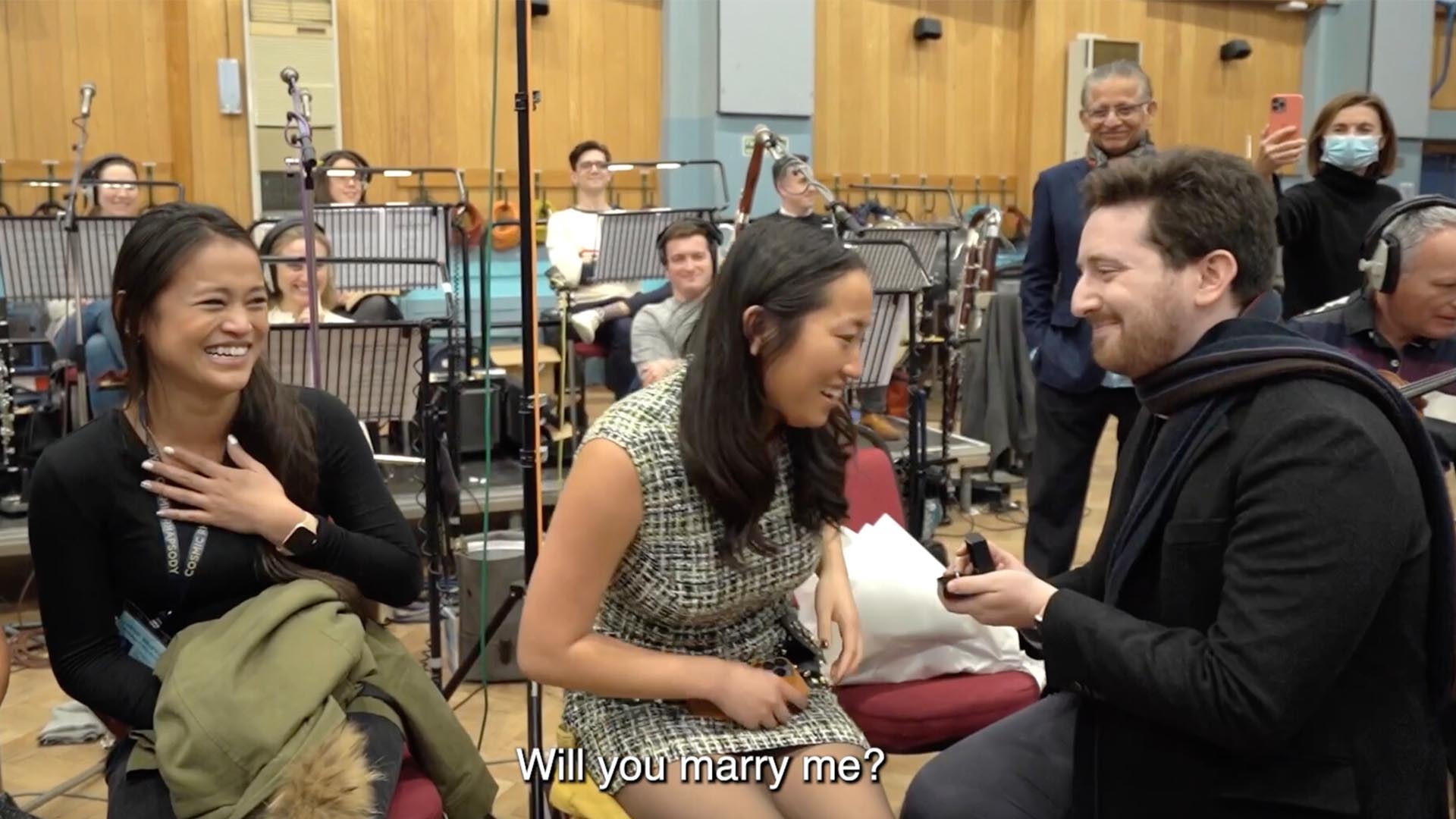
In what is reportedly a historic first for the iconic studio, Ron proposes to Christina during the recording of their own composition. It is a moment of profound vulnerability and joy. The “pie in the sky” is no longer a distant, fantastical object; it becomes a shared destiny, a love story culminating at the heart of their creative expression. This reveal is the film’s masterstroke, a twist so earnest and surprising that it re-contextualizes everything that came before. The music, which at times felt disconnected from the animation, suddenly clicks into place as the literal soundtrack to a life-changing event.
Understanding the director’s vision adds another layer of depth. Dr. Susan Mey Lee Lim, a surgeon and scientist whose work focuses on addressing the global challenge of loneliness, brings a unique perspective. Her goal to explore “a future of companionship that extends beyond humans” is reflected in both the animated tale of cosmic friendship and the very real human connection that forms the film’s climax.
This is not to say the execution is perfect. The film sometimes struggles to integrate its disparate parts. The transition between the polished live orchestra, the raw behind-the-scenes recording, and the animation can feel abrupt, breaking the immersive spell. There are also moments where background audio noise and an overpowering score detract from the clarity of the dialogue. A part of me wonders if the film might have been even more powerful by forgoing the animation altogether, focusing instead on the incredible musicians and the beautifully human story of its composers.
Despite these technical hitches, “Pie in the Sky” is an unforgettable project. It is a look into the generous spirit of its creators, who poured their personal and artistic souls into its creation. The film possesses a rare ability to elevate the spirit, reminding us that our greatest aspirations are often found not in the stars, but in the connections we forge right here on Earth. It left me asking, as it asks its audience: What is the piece of the pie you might be missing?

A Call That Changes Everything in Don’t Hang Up

The Quiet Rebellion of Sister Wives

Can You Trust What You See Anymore?

Finding Acceptance

Utah Screenwriters Spotlight

Waiting for You

